NEWSLETTER

Sign up to read weekly email newsletter

NEURAL ROUNDS

Search
  • Home
  • Clinical News
  • The AI Tool Index
    The AI Tool IndexShow More
    Beyond the Radiologist Backlog: Auditing Computer-Aided Detection (CAD) in Emergency Chest X-Rays
    May 20, 2026
  • Editorials
  • Workflow & Operations
Reading: Beyond the Radiologist Backlog: Auditing Computer-Aided Detection (CAD) in Emergency Chest X-Rays
Share
Font ResizerAa

Neural Rounds

Search
Follow US
Made by ThemeRuby using the Foxiz theme. Powered by WordPress
The AI Tool Index

Beyond the Radiologist Backlog: Auditing Computer-Aided Detection (CAD) in Emergency Chest X-Rays

By Dr. Rakshit Raj Singh Deori - Editor-in-Chief
Last updated: May 20, 2026
3 Min Read
Share

In a high-throughput emergency block, a standard posterior-anterior (PA) chest X-ray is often the initial diagnostic line of defense. However, when clinical volume outpaces specialist staff, non-radiologist clinicians must make rapid triage decisions.

Contents
1. The Core Technology: Pixel-Level Visual Attention2. Clinical Trial Metrics & Diagnostic Safety3. The Pitfall: Automation Bias and Confounding Artifacts4. Neural Rounds Recommendation Checklist

Computer-Aided Detection (CAD) software leveraging convolutional neural networks (CNNs) has emerged not to replace the radiologist, but to act as a diagnostic safety net against critical interpretive errors.
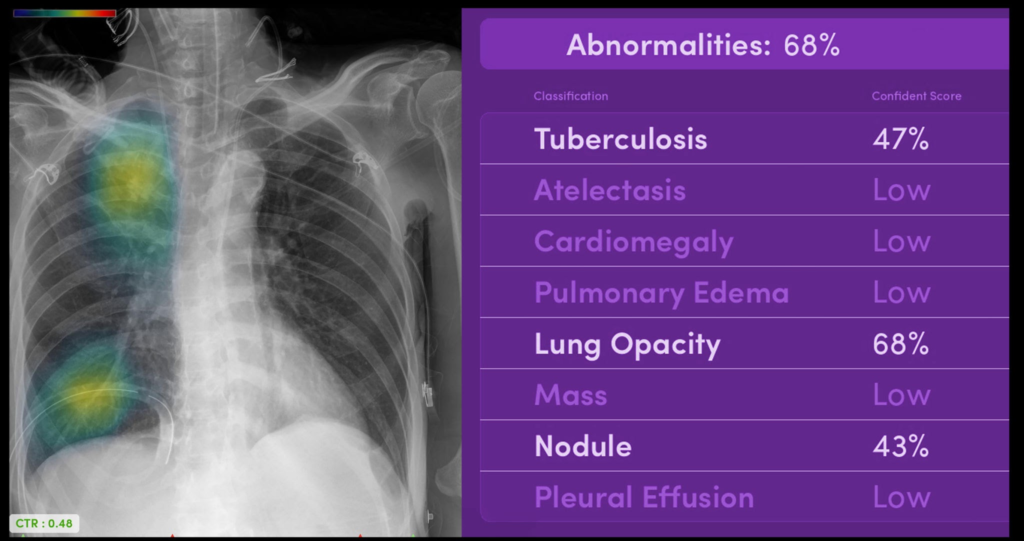
AI CAD pipeline identifying localized pulmonary abnormalities. Source: mr.suphachai praserdumrongchai / Getty Images

1. The Core Technology: Pixel-Level Visual Attention

Modern radiology AI tools pass raw DICOM imaging data through deep neural networks trained on millions of curated radiograph pairs.

Instead of presenting a binary “normal vs. abnormal” diagnostic result, the system uses two distinct analytical mechanisms:

  • Heatmap Localization: Utilizing Grad-CAM (Gradient-weighted Class Activation Mapping) frameworks to project visual heatmaps directly over areas of high diagnostic suspicion (e.g., subtle apical pneumothorax lines or hidden retrocardiac opacities).
  • Bone Suppression Algorithms: Temporarily generating a software-modified image that digitally suppresses clavicular and rib shadows, allowing clinicians to look past osseous structures for underlying parenchymal nodules.

2. Clinical Trial Metrics & Diagnostic Safety

When auditing CAD systems against gold-standard consensus panels, the software demonstrates substantial utility in minimizing observational oversight:

Diagnostic TargetSensitivitySpecificityClinical Value Field
Pneumothorax94.2%91.5%Critical for trauma and post-procedural triage.
Pulmonary Nodules88.7%86.1%Catching incidental early-stage malignancies.
Pleural Effusion92.1%93.4%Accelerating bedside drainage decisions.

3. The Pitfall: Automation Bias and Confounding Artifacts

Despite exceptional raw metrics, frontline implementation reveals a distinct psychological hurdle: automation bias.

When working long consecutive shifts, overworked residents are susceptible to over-relying on algorithmic flags. It is vital to note that external medical hardware artifacts—such as overlying ECG leads, central venous catheters, or external dress buttons—can cause pixel anomalies that trigger false positive heatmaps.

4. Neural Rounds Recommendation Checklist

For departments seeking to deploy a CXR CAD tool into their triaging interface, our clinical informatics review stresses three deployment parameters:

  1. Zero-Click Workflow integration: The AI evaluation must run in the background via PACS (Picture Archiving and Communication System) and push notifications straight to the emergency terminal within 60 seconds of image acquisition.
  2. Explicit Probability Sliders: The interface must allow clinicians to adjust threshold settings to scale down false-positive noise in low-risk cohorts.

Sign Up For Daily Newsletter

Be keep up! Get the latest breaking news delivered straight to your inbox.
By signing up, you agree to our Terms of Use and acknowledge the data practices in our Privacy Policy. You may unsubscribe at any time.
Share This Article
Facebook Email Copy Link Print
ByDr. Rakshit Raj Singh Deori
Editor-in-Chief
Follow:
Dr. Rakshit Raj Singh Deori founded Neural Rounds to serve as the definitive daily ward walk for medical AI intelligence. His work focuses entirely on bridging the critical gap between frontier machine learning models and practical, evidence-based patient care.
Leave a Comment Leave a Comment

Leave a Reply Cancel reply

Your email address will not be published. Required fields are marked *

SUBSCRIBE NOW

Subscribe to our newsletter to get our newest articles instantly!

HOT NEWS

FDA Clears New Autonomous AI for Diabetic Retinopathy Screening in Primary Care

The landscape of preventive ophthalmology shifted this week with the latest regulatory clearance of an…

May 16, 2026

Beyond the Radiologist Backlog: Auditing Computer-Aided Detection (CAD) in Emergency Chest X-Rays

In a high-throughput emergency block, a standard posterior-anterior (PA) chest X-ray is often the initial…

May 20, 2026

NEURAL ROUNDS

Neural Rounds is an independent clinical publication dedicated to auditing and reviewing healthcare artificial intelligence. We analyze ambient scribes, diagnostic algorithms, and digital operational tools through the strict lens of evidence-based medicine to help clinicians safely optimize ward workflows.

LEGAL

  • Editorial Board
  • Funding Policy
  • Editorial Policy
  • Disclaimer
  • Contact Us

Follow US: 

Neural Rounds India

A5 Officers Enclave Phase 2 Pilikothi Road, Haldwani Uttarakhand, India

Welcome Back!

Sign in to your account

Username or Email Address
Password

Lost your password?